

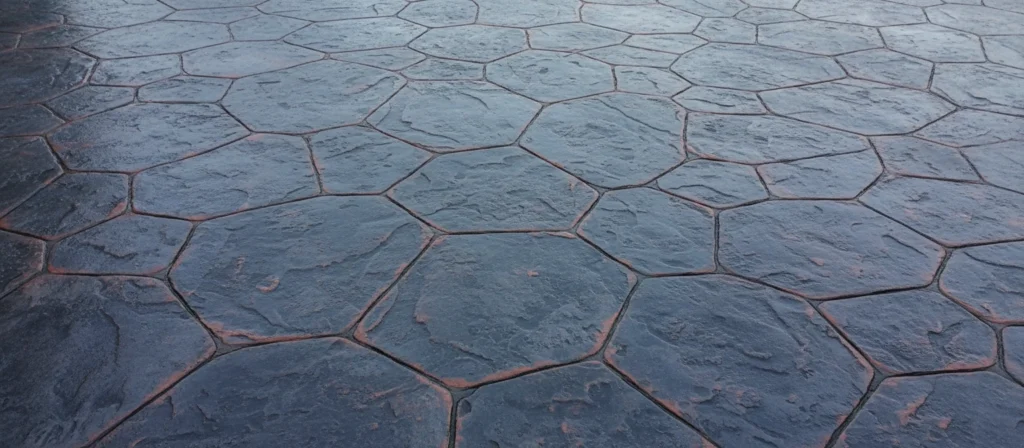
Choosing the right stamped concrete color combinations is one of the most important design decisions in any decorative concrete project. While patterns define texture, color determines realism, depth, and how well the surface blends with the surrounding property.
Many homeowners focus on stamping patterns first, then choose color as an afterthought. This often leads to finishes that feel flat, artificial, or disconnected from the home’s architecture. The most natural-looking results come from carefully pairing base tones with accent colors that mimic real stone, brick, or wood variation.
For patios, driveways, and walkways in Denver, the right combination needs to balance design, sunlight exposure, and long-term durability.
How Stamped Concrete Color Systems Work
Stamped concrete color is typically created using two layers working together: a base color and an accent color.
Base Color (Integral Color)
The base color is mixed directly into the concrete before it is poured. This method distributes pigment throughout the slab so the color is consistent even if the surface wears over time.
Base colors typically include:
- Light gray and charcoal tones
- Tan and sandstone shades
- Warm browns and earth tones
- Soft off-whites or buff colors
This layer establishes the overall tone of the surface and ensures long-term color stability.
Accent Color (Release or Antiquing Agent)
After the concrete is placed and stamped, a secondary accent color is applied to the surface. This is usually a darker pigment that settles into the textured areas of the pattern.
Once the surface is cleaned, the accent color remains in deeper grooves while lighter areas stay exposed. This contrast is what creates a natural stone or masonry appearance.
Without this contrast layer, stamped concrete often looks flat and artificial.
What Influences Color Selection
Choosing stamped concrete color combinations is not just about personal preference. Several site-specific factors affect how colors will look once installed.
Architecture and Surrounding Materials
The most important consideration is how the concrete fits with the home or building.
For example:
- Brick homes often pair better with neutral gray or tan tones rather than matching reds exactly
- Modern homes typically use cooler grays with charcoal accents
- Rustic properties work well with warm browns and sandstone blends
The goal is contrast and balance, not exact matching.
Sun Exposure and Heat
Color affects surface temperature. Darker tones absorb more heat, while lighter colors reflect sunlight.
- Dark charcoal or espresso tones work well for driveways and colder climates
- Light tan or gray tones are better for barefoot walking areas
- Mid-tone blends offer a balance between heat control and visual depth
In sunny climates, this choice directly impacts comfort and usability.
Pattern Depth and Texture
The depth of the stamped pattern also changes how color appears.
- Deep patterns (cobblestone, slate) create stronger contrast with accent colors
- Subtle textures produce softer, more blended finishes
- Highly detailed patterns show more variation and shadowing
Color and texture must be selected together for a consistent final look.
Traffic and Wear Conditions
Different surfaces experience different levels of wear.
- Driveways require darker or mid-tone blends to hide tire marks and dirt
- Walkways benefit from balanced tones that stay clean-looking
The goal is long-term appearance stability under real use conditions.
Popular Stamped Concrete Color Combinations
While custom mixes are always possible, certain combinations consistently perform well in residential and commercial projects.
Modern Gray Slate
- Base: Light gray or pewter
- Accent: Charcoal or dark gray
This combination works well for contemporary homes and clean architectural designs.
Warm Natural Stone
- Base: Sandstone or desert tan
- Accent: Walnut or medium brown
A popular choice for patios and backyard living spaces.
Rustic Earth Blend
- Base: Buff or light brown
- Accent: Dark espresso
Ideal for wood plank stamps and natural landscape settings.
Classic Brick Tone
- Base: Terra cotta or adobe
- Accent: Deep brown or charcoal
Common for traditional walkways and entry areas.
Why Color Mistakes Happen
Most color issues are not caused by the materials themselves, but by installation conditions.
Common problems include:
- Uneven application of release agents
- Inconsistent concrete mixing during placement
- Overworking or underworking the surface during stamping
- Sealing too early or under improper conditions
These issues can result in blotchy finishes, weak contrast, or unnatural coloration.
The Role of Sealing in Final Appearance
After stamping and coloring, a protective sealer is applied to lock in the finish.
The sealer:
- Enhances color depth
- Protects against moisture and stains
- Helps maintain contrast between base and accent tones
Different sealers can slightly change how colors appear, making them richer or more muted depending on finish type.
Integrating Color Across the Property
Stamped concrete is most effective when it is part of a larger design system rather than a standalone surface.
For example:
- A warm tan patio can connect visually with retaining walls or steps
- A gray driveway can match modern walkway or entry features
- Accent borders can tie multiple outdoor zones together
When colors are coordinated across multiple surfaces, the entire property feels more unified and intentional.
How Cain Construction Company Approaches Stamped Concrete Color Design
Cain Construction Company provides stamped and decorative concrete services throughout the Denver area, helping homeowners and builders select finishes that match both design goals and site conditions.
Each project considers:
- Architectural style of the property
- Sun exposure and usage patterns
- Pattern selection and texture depth
- Long-term durability and maintenance
The goal is to create stamped concrete surfaces that look natural, perform well, and integrate cleanly into the surrounding environment.
Request a Quote for Stamped Concrete in Denver
Stamped concrete color combinations have a major impact on how a finished surface looks and performs over time. Choosing the right blend ensures your patio, driveway, or walkway feels cohesive and durable.
If you are planning a stamped concrete project in the Denver area, Cain Construction Company can help evaluate your site and recommend the right color and pattern combination.
Contact Cain Construction Company to request a quote for stamped concrete installation.