

Heated Driveways in Denver
Cain Construction Company handles heated driveway projects across the Denver area, including new heated driveways, full driveway replacement with integrated heat, and finish options designed for winter conditions and daily use.
Tired of Dealing With Snow and Ice on Your Driveway Every Winter?
A heated driveway is designed to reduce snow and ice buildup on the surface and improve access during winter conditions. For some properties, that solves a recurring problem that standard concrete alone does not address.
This type of project is often considered when the driveway is:
- steep
- exposed to regular snow and ice
- hard to clear efficiently
- used often during winter months
- already being replaced or rebuilt
Some projects are driven by access and winter function. Others are planned as part of a new driveway or full replacement. In either case, the goal is the same: a driveway that works better during cold weather.
Why Property Owners Choose Heated Driveways
A heated driveway changes how the surface performs in winter. Instead of relying only on shoveling, de-icing, or repeated clearing, the driveway is built with a system designed to help manage snow and ice more directly.
A heated driveway can help:
- reduce snow and ice buildup
- improve winter access
- cut down on manual clearing
- make the surface easier to use during colder months
Stop dealing with snow and ice on your driveway
Heated driveways are built to eliminate buildup and reduce winter maintenance.
Heated Driveway Services We Handle
Cain Construction Company handles heated driveway projects in several forms, depending on the site and the condition of the existing driveway.

Heated Driveway Installation
A heated system can be planned into the job from the beginning. This allows the driveway layout, concrete work, and winter-use goals to be considered together.

Heated Driveway Replacement Projects
When an existing driveway is cracked, worn, uneven, or no longer functioning well, replacement can be the right time to add a heating system. This is often a more practical route than trying to improve winter performance on an older surface that already needs major work.

A heated driveway can still be finished to match the property. Finish options such as broom finish or sand finish can be reviewed as part of the project scope.
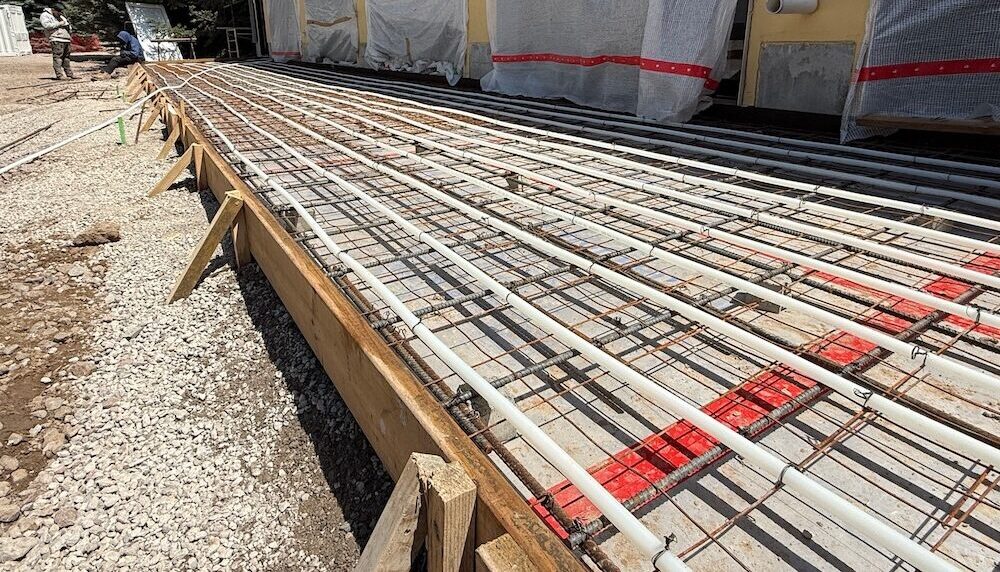
Heated Driveways for Difficult Winter Access
Some heated driveway projects are driven by site conditions such as slope, exposure, or a layout that is difficult to clear well. In those cases, the project is less about appearance and more about making the driveway easier to use during winter conditions.
Hydronic or Electric
There are two main types of heated driveway system, and the choice between them is the first real decision.
Hydronic. A boiler heats a glycol mix that runs through tubing in the slab. It usually costs more to install and less to run, and it suits larger areas.
Electric. Heating cables are set in the slab. It usually costs less to install and more to run, and it suits smaller areas such as walkways, steps, or tire tracks.
What drives the choice is the size of the area, whether there is already a boiler or gas service at the home, and how often the system will actually run. These are reviewed during the estimate.

What It Costs to Run, and When It Pays
It is the question every buyer asks. Running cost depends on the size of the heated area, the type of system, how it is controlled, and how many storms it has to handle in a winter. A system that turns on automatically when snow is detected runs far less than one left on all season.
Against that, a heated driveway removes the plowing contract, the de-icer damage, and the slip risk on an icy slope. It also helps the driveway itself last longer, because the concrete is not being attacked by de-icing chemicals every winter. For a fuller look at the trade-offs, read whether heated driveways in Colorado are worth it, or see our concrete driveway service. To talk through a system for your home, request a quote.
Built for Colorado Weather
Freeze-thaw cycles and regular snow buildup are what drive the need for heated driveways. Instead of managing accumulation after each storm, the system is built to prevent it from building up in the first place.
Frequently Asked Questions
How does a heated driveway work?
A heated driveway uses a snow-melt system installed beneath the concrete surface. The purpose is to help reduce snow and ice buildup and improve driveway use during winter conditions.
When does a heated driveway make the most sense?
This type of project is often a strong fit when the driveway has regular snow and ice issues, a slope that is harder to manage, difficult winter access, or when a full driveway replacement is already being planned.
What types of finish options are available for a heated driveway?
Heated driveways can still be finished with options such as broom finish or sand finish. The finish affects the surface appearance and texture, while the heating system affects winter performance below the slab.
Will a heated driveway still look like a normal driveway?
Yes. A heated driveway will still look like a finished driveway that fits the property. The heating system is built into the slab, but the visible surface is still planned like any other concrete driveway.
What affects the scope of a heated driveway project?
Scope can vary based on the driveway layout, existing concrete removal, site access, slope, drainage, finish selection, and whether the job is part of a new driveway or full replacement.
Do you serve my area?
Cain Construction Company serves customers in Denver and nearby communities, including Englewood, Aurora, and Castle Pines. Service availability can depend on the location and project scope.
Ready to Talk About a Heated Driveway?
If you are planning a heated driveway in the Denver area, Cain Construction Company can review the scope and help you take the next step.