

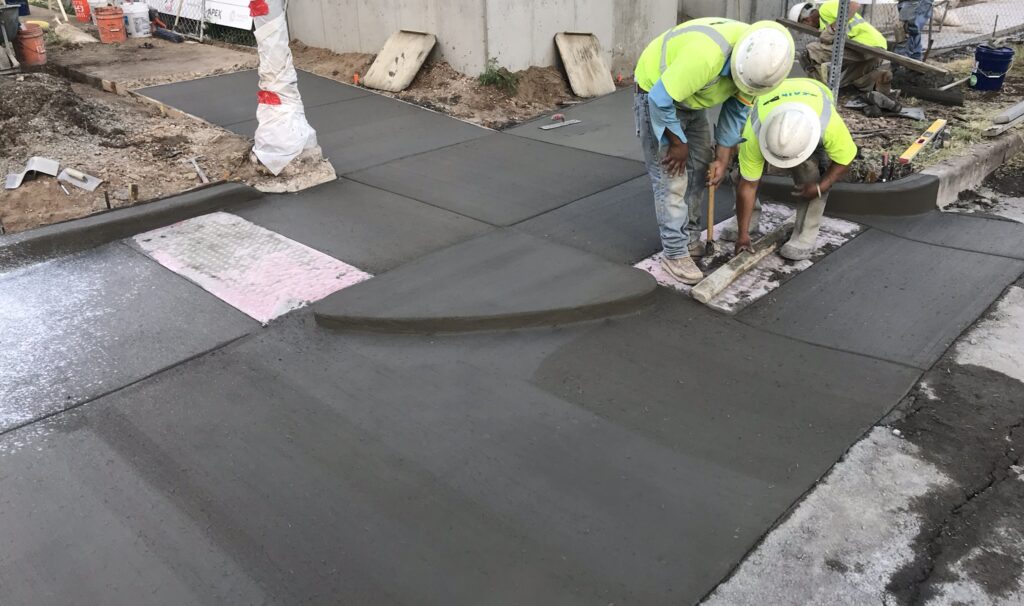
Flatwork construction refers to any horizontal concrete surface installed on a property. This includes driveways, sidewalks, patios, slabs, courtyards, parking areas, and other exterior concrete surfaces that sit flat on a prepared base.
While flatwork may appear simple from the outside, its long-term performance depends almost entirely on what happens before and during installation. Poor preparation or shortcuts in the process often lead to cracking, sinking, or drainage issues long before the concrete should naturally fail.
For homeowners, builders, HOAs, and commercial property owners in Denver, understanding how flatwork construction actually works is essential for making informed decisions and avoiding early repairs.
What Is Included in Flatwork Construction?
Flatwork construction covers all horizontal concrete surfaces placed on grade or slightly above grade. These surfaces are designed to carry different types of loads depending on their use.
Residential Flatwork
In residential settings, flatwork typically includes:
- Driveways
- Sidewalks and walkways
- Patios and outdoor living areas
- Garage slabs and small pads
These surfaces must handle vehicle loads, pedestrian traffic, furniture, and weather exposure while maintaining a clean and level appearance.
Commercial Flatwork
Commercial flatwork is larger in scale and must support heavier and more frequent loads. Common applications include:
- Parking lots
- Loading zones
- Warehouse floors
- Commercial walkways and courtyards
- Site concrete and accessibility ramps
These projects often require stricter grading, reinforcement, and compliance with accessibility and municipal standards.
Cain Construction Company performs residential and commercial flatwork across the Denver area as part of broader exterior concrete and site development work.
Why Flatwork Fails When Done Poorly
Most flatwork problems are not caused by the concrete itself, but by issues beneath it or in the installation process.
Common failure causes include:
- Poor soil compaction
- Inadequate base material
- Incorrect slope or grading
- Weak reinforcement placement
- Poor finishing practices
When these steps are not done correctly, the concrete is forced to carry loads it was never properly supported for.
The Flatwork Construction Process
A durable concrete slab depends on a controlled, step-by-step process. Each phase affects the final performance.
1. Site Preparation and Subgrade Work
The first step is preparing the soil beneath the slab.
This includes:
- Removing topsoil and organic material
- Excavating to proper depth
- Leveling and grading the site
- Compacting native soil
If the soil is unstable or too soft, it may be replaced or improved with more stable material. Proper compaction ensures the slab has a solid foundation and reduces future movement.
2. Base Installation and Forming
After the subgrade is prepared, a compacted gravel or crushed stone base is installed. This layer helps distribute loads and improves drainage beneath the slab.
Forms are then installed around the perimeter to define the shape and elevation of the concrete. These forms must be straight, level, and properly braced to hold pressure during the pour.
3. Drainage and Slope Design
Flatwork must be designed to manage water from the beginning.
Slabs are typically given a slight slope to allow water to drain away from buildings and high-use areas. Without proper slope, water can collect on the surface and cause long-term issues.
Good drainage design also helps prevent:
- Surface erosion
- Ice buildup in colder months
- Damage to adjacent structures
4. Reinforcement Placement
Concrete is strong under compression but weaker under tension. To help manage stress, reinforcement is added inside the slab.
This may include:
- Steel rebar grids
- Welded wire mesh
- Synthetic fiber reinforcement (in some cases)
Reinforcement helps control cracking and improves overall durability, especially in high-traffic areas like driveways and commercial slabs.
5. Concrete Placement and Finishing
Once the site is prepared, concrete is poured and spread evenly within the forms.
The surface is then:
- Screeded to the correct elevation
- Smoothed and floated
- Finished based on use requirements
For exterior flatwork, a broom finish is commonly used because it provides a textured, slip-resistant surface.
Finishing must be timed correctly. Working the surface too early or too late can affect durability and appearance.
6. Curing and Strength Development
After finishing, concrete must cure properly. Curing allows the material to gain strength over time through controlled moisture retention.
If concrete dries too quickly, it can weaken the surface and increase the risk of cracking or scaling. Proper curing methods help ensure long-term performance.
Common Flatwork Problems
Even well-poured concrete can fail if supporting conditions are not correct.
Cracking and Movement
Cracking can occur when soil beneath the slab shifts or when control joints are not properly placed. While small cracks are common, large or shifting cracks often indicate deeper issues.
Standing Water
If water pools on the surface, it usually means the slope was not properly designed. Standing water can lead to staining, surface wear, and ice hazards in colder weather.
Surface Scaling
Scaling occurs when the top layer of concrete begins to flake or break down. This is often caused by poor finishing practices or excessive water used during surface work.
Why Proper Preparation Matters Most
The visible surface of concrete is only as strong as the layers beneath it. Subgrade preparation, base compaction, and drainage design have a greater impact on performance than the finish itself.
When these steps are done correctly, flatwork can last for many years with minimal maintenance. When they are skipped or rushed, problems often appear early and worsen over time.
How Cain Construction Company Approaches Flatwork
Cain Construction Company provides flatwork construction services throughout the Denver area, working on residential and commercial projects that require durable exterior concrete solutions.
Each project is evaluated based on site conditions, intended use, and drainage requirements. The focus is on building concrete surfaces that are properly supported from the ground up, not just finished on the surface.
See all of our concrete services for the flatwork and structural work we handle.
Request a Quote for Flatwork Construction in Denver
Flatwork construction plays a key role in how a property functions and performs over time. When properly installed, it provides safe, durable, and long-lasting surfaces for daily use.
If you are planning a driveway, patio, sidewalk, or commercial concrete project in the Denver area, Cain Construction Company can evaluate your site and provide a clear construction plan.
Contact Cain Construction Company to request a quote for flatwork construction services.