

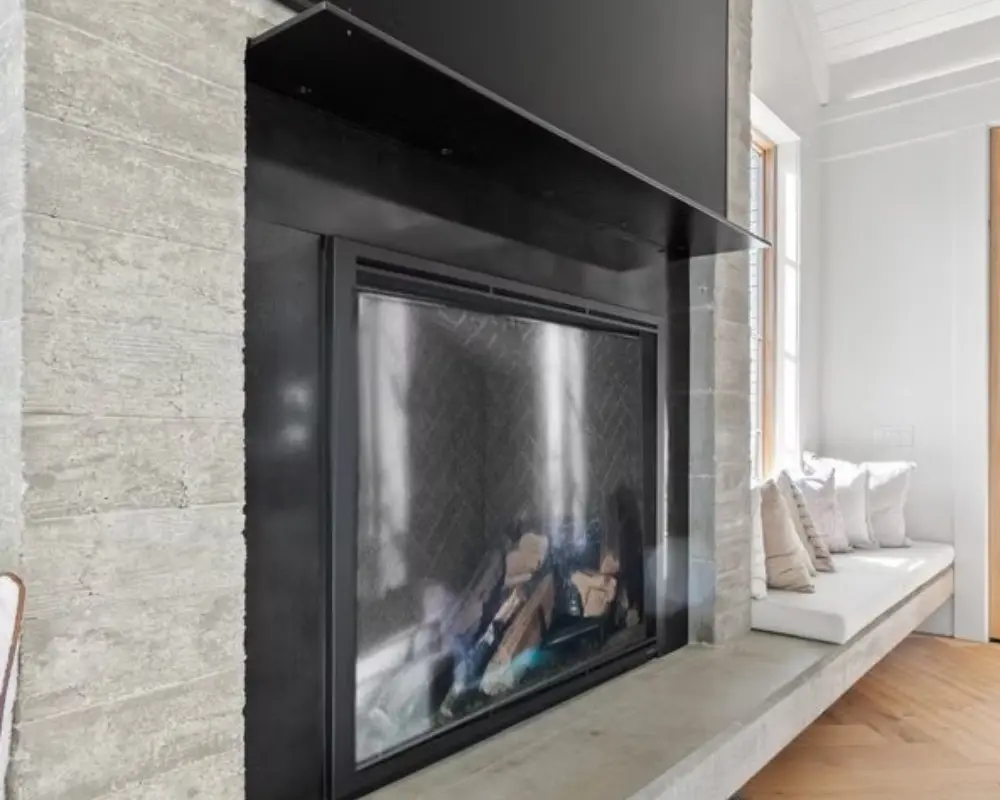
Exposed concrete has become a defining material in modern residential, commercial, and landscape design. But “concrete wall” doesn’t mean one look. The finish applied to a concrete wall determines whether the final surface reads as industrial, refined, textured, or warm. For homeowners, architects, builders, and developers planning a project with exposed concrete walls in the Denver area, understanding the available finishes and how they’re achieved helps set realistic expectations and avoid costly changes mid-project.
Common Concrete Wall Finish Types
Smooth-Faced Finish
A smooth-faced finish is achieved by pouring concrete against form materials with a tight, consistent surface, such as steel forms or high-grade plywood with a smooth liner. The result is a clean, flat, minimal-texture surface often chosen for contemporary architecture, interior feature walls, and commercial lobbies. Smooth finishes show every imperfection in the formwork, so form quality and careful placement matter more here than with any other finish type.
Board-Formed Concrete
Board-formed walls are created by using rough-sawn lumber as the form material, which transfers the wood grain texture directly onto the concrete surface. This finish is popular for residential exteriors, landscape walls, and architectural feature walls where a warm, natural texture is desired alongside the strength of concrete. The width, spacing, and grain pattern of the boards used in formwork directly shape the final look, so board selection is a design decision, not just a construction detail.
Exposed Aggregate Finish
Exposed aggregate finishes reveal the stone or decorative aggregate within the concrete mix by removing a thin layer of surface cement paste, typically through washing, brushing, or light acid etching shortly after placement. This finish is common in landscape walls, retaining structures, and exterior applications where a textured, natural stone-like appearance is preferred. The aggregate size, color, and distribution in the mix design determine how dramatic or subtle the final texture appears.
Decorative and Architectural Finishes
Beyond the three primary categories, decorative finishes include stamped patterns, integral color, form liners that imprint custom patterns or textures, and combination finishes that blend smooth and textured zones on the same wall. These finishes are common in commercial developments, entryway features, and site branding elements where the concrete wall itself becomes a design statement rather than a structural backdrop.
How Formwork, Placement, and Finishing Technique Shape the Final Look
The finish on a concrete wall is not something added after the pour. It’s built into the process from the first form panel set. Formwork material, texture, and joint pattern determine the base surface characteristics. Placement technique, including how concrete is consolidated and vibrated within the forms, affects whether air voids, honeycombing, or bug holes appear on the finished face. Finishing technique after form removal, such as grinding, sealing, or selective patching, refines the final appearance but cannot fully correct poor formwork or placement. This is why experienced crews treat finish quality as a planning and execution issue from day one, not a cosmetic afterthought.
Comparing Finishes for Residential, Commercial, and Landscape Use
Residential Applications
Homeowners often favor board-formed or smooth finishes for feature walls, retaining walls, and exterior accents, where texture and warmth complement other materials like wood siding or stone.
Commercial Applications
Commercial and institutional projects frequently use smooth-faced finishes for a clean, professional appearance, or architectural form-liner finishes to reinforce brand identity or a specific design language across a building’s exterior.
Landscape Applications
Landscape walls, including retaining walls and site walls, tend to favor exposed aggregate or board-formed finishes, since these textures hold up well outdoors and blend naturally with surrounding hardscape and planting beds.
Design Considerations Before You Pour
Several factors should be worked out before concrete placement begins:
- Texture and pattern, since the formwork itself creates the texture and cannot be changed after the pour without significant additional work.
- Color, whether achieved through integral pigments, stains applied after curing, or the natural color of exposed aggregate.
- Surrounding materials, since a concrete wall finish should complement adjacent brick, stone, wood, or landscaping rather than clash with it.
- Visibility and viewing distance, since a highly detailed texture may be lost on a wall viewed from a distance, while a subtle finish may look flat up close.
Why Finish Decisions Must Be Made Before the Pour
Once concrete is placed and cured, changing the fundamental finish is difficult and expensive. Smooth concrete can’t easily become board-formed after the fact, and correcting a poorly planned exposed aggregate finish often means removing and repouring the wall. This makes early planning between the owner, architect, and contractor essential. Sample panels or mockups are a worthwhile step on larger commercial and architectural projects, allowing everyone to confirm the finish, color, and texture before committing to full-scale placement.
Long-Term Appearance: Weather, Maintenance, and Sealing
Denver’s climate puts exposed concrete walls through real stress, including UV exposure, freeze-thaw cycling, and occasional de-icing salt contact near walkways and drives. Sealers help protect finished surfaces from moisture intrusion and staining, and the right sealer depends on the finish type. Smooth finishes often benefit from a penetrating or film-forming sealer that maintains appearance without altering the surface look, while textured and exposed aggregate finishes typically use breathable sealers that protect without trapping moisture in the textured surface. Routine cleaning and periodic resealing extend the life and appearance of any exposed concrete wall finish.
Finish Quality Depends on Planning and Craftsmanship
A high-quality finish is not simply a matter of using better concrete. It depends on the formwork selected, the skill of the crew placing and consolidating the concrete, and the finishing techniques applied at the right stage of the process. Two walls poured with an identical concrete mix can look completely different depending on how they were formed and finished. This is why choosing a contractor with genuine experience in architectural and decorative concrete finishing matters as much as the design itself.
FAQ
Can I change the finish of an existing concrete wall?
Some cosmetic changes are possible, such as applying a stain, coating, or overlay, but fundamental texture changes like converting a smooth wall to board-formed generally require removal and repour.
How long does a concrete wall finish last before it needs maintenance?
With proper sealing, most exterior concrete wall finishes in Denver’s climate perform well for many years before resealing is needed, though exposure and traffic conditions affect the timeline.
Is exposed aggregate finish more expensive than a smooth finish?
Exposed aggregate typically requires additional labor steps, such as surface washing or light etching, and sometimes a specialized aggregate mix, which can add cost compared to a standard smooth finish.
Can concrete wall finishes include color?
Yes. Integral color additives, concrete stains, and dyed sealers are all options, and the best method depends on the finish type and the desired durability.
Do I need sample panels before committing to a finish for a large project?
For commercial and architectural projects, sample panels or mockups are strongly recommended. They let everyone see the actual texture, color, and finish in real conditions before full-scale placement begins.
Ready to Plan Your Concrete Wall Finish?
Whether you’re planning a residential feature wall, a commercial exterior, or a landscape retaining wall, Cain Construction Company can help you choose and execute the right finish for your project. Contact Cain Construction Company to discuss your design goals and get expert guidance before you pour.