

A sidewalk seems like one of the simpler concrete projects a property owner will tackle, but a new sidewalk that holds up for decades depends on the same fundamentals as any other concrete structure: proper planning, correct base preparation, adequate reinforcement, and attention to drainage. Skipping steps on a walkway project is common because the finished product looks straightforward, but the ground beneath it, especially in Colorado, is anything but simple.
This guide covers how a sidewalk paving project should be planned and built, from layout through finish, for homeowners, HOAs, property managers, and commercial property owners planning a new walkway or a full paving project.
Planning a Sidewalk Paving Project
Layout and Purpose
The first step is defining the sidewalk’s path, width, and purpose. A residential front walk has different requirements than a commercial sidewalk that needs to accommodate heavier foot traffic, snow removal equipment, or accessibility standards. Layout decisions should account for how the walkway connects to driveways, entrances, parking areas, and existing hardscape, since these transition points are common failure spots if not planned correctly.
Grading and Site Assessment
Before any concrete work begins, the site needs to be assessed for existing grade, soil conditions, and how surface water currently moves across the property. This assessment determines the slope the finished sidewalk needs to achieve for proper drainage and identifies any soil issues, such as Colorado’s common expansive clay, that will affect base preparation.
Accessibility and Code Requirements
Commercial sidewalks and many residential projects near public right-of-way need to meet accessibility standards, including slope limits, cross-slope limits, and surface requirements. HOAs and commercial property owners in particular should confirm local code requirements early in planning, since retrofitting a non-compliant sidewalk after the fact is far more expensive than building it correctly the first time.
How a Sidewalk Is Built
Site Preparation and Excavation
Excavation removes existing material to the depth needed for the base layer and the concrete slab itself. This stage also removes any old, cracked, or unstable sidewalk sections and clears the path of roots, debris, and organic material that could cause settling later.
Base Preparation
A properly compacted gravel base underneath the concrete is one of the most important factors in how long a sidewalk lasts. The base layer provides a stable, well-drained foundation and helps prevent the freeze-thaw heaving that’s common in Colorado’s climate. Skipping proper base compaction is one of the most frequent causes of premature cracking and unevenness.
Reinforcement
Depending on the sidewalk’s width, expected loads, and soil conditions, reinforcement such as wire mesh or rebar may be used to add tensile strength and help control how the concrete cracks over time. Reinforcement is more commonly specified for commercial sidewalks or sections carrying heavier loads than a standard residential walkway.
Concrete Placement and Finishing
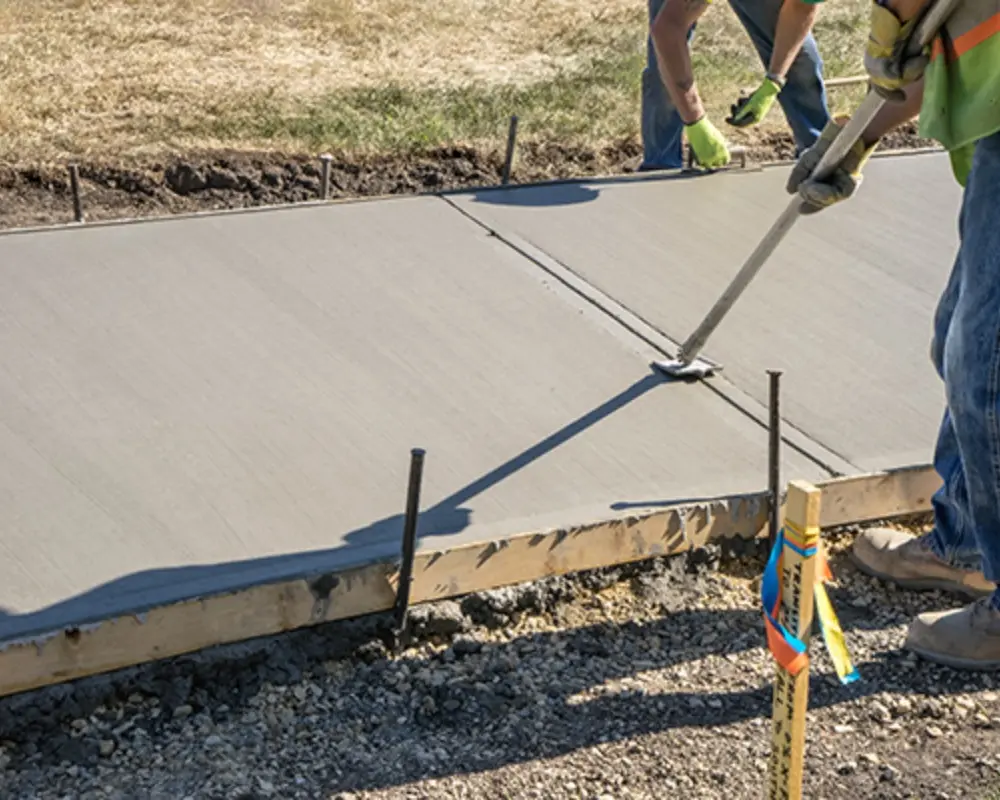
Concrete is placed, screeded to the correct thickness and slope, and finished according to the project’s requirements. Thickness and mix design should account for expected use, since a commercial sidewalk servicing heavy foot traffic or occasional vehicle crossing needs a different specification than a residential front walk.
Expansion Joints and Control Joints
Concrete expands and contracts with temperature changes, and sidewalks need properly placed expansion joints and control joints to manage that movement without uncontrolled cracking. Joint spacing should match the slab thickness and width, and joints need to be cut or formed at the correct depth to actually control cracking rather than just being cosmetic.
Drainage and Slope Considerations
A sidewalk needs a slight slope, typically a small percentage grade, to shed water rather than allow it to pool on the surface. Standing water on a sidewalk becomes a slip hazard and, in Colorado winters, a repeated freeze-thaw cycle that accelerates surface deterioration. Drainage planning also needs to account for where water is directed once it leaves the sidewalk surface, so it doesn’t end up pooling against a foundation, in a neighboring yard, or across the walkway itself from an adjacent slope.
When Replacement Makes More Sense Than Patching
Full paving and replacement projects are generally the right call when an existing sidewalk has widespread structural issues, extensive settling, or has reached a point where patch repairs would only address the surface while the underlying base problem remains. This article focuses on planning and installing new sidewalks and full paving projects; if you’re trying to decide whether a specific section of existing sidewalk needs repair or full replacement, that decision depends on the extent and cause of the damage.
Finish Options
Broom Finish
A broom finish is the standard choice for most sidewalks because it provides reliable slip resistance in wet or icy conditions, which matters significantly in a climate with regular snow and ice.
Decorative Finishes
For projects where appearance matters as much as function, such as entryways, commercial frontages, or HOA common areas, decorative finishes like exposed aggregate, stamped patterns, or integral color can be used while still maintaining adequate slip resistance.
What Contributes to a Longer-Lasting Sidewalk in Colorado
Sidewalks that hold up over the long term in this climate share a few common traits: a properly compacted base placed below problem soil layers, correctly spaced and cut joints that control cracking predictably, adequate slope for drainage, and a mix design and thickness matched to actual expected use. None of these are optional extras. Each addresses a specific way Colorado’s freeze-thaw cycles and expansive soils stress a concrete slab over time.
Why Installation Technique Reduces Future Maintenance
The upfront cost difference between a properly installed sidewalk and a rushed one is usually smaller than the long-term cost of repairing a poorly built one. Correct base compaction, properly placed joints, and appropriate slope all reduce the likelihood of the cracking, heaving, and pooling issues that generate repeat maintenance calls. Investing in correct installation technique from the start is the most reliable way to minimize maintenance costs over the sidewalk’s lifespan.
FAQ
How thick should a concrete sidewalk be?
Standard residential sidewalks are typically around four inches thick, while commercial sidewalks or those subject to occasional vehicle loading may need additional thickness and reinforcement to handle the higher load.
How long does a new sidewalk take to install?
Timelines depend on length and site conditions, but most residential sidewalk sections can be completed within a few days, including excavation, base prep, and curing time before the surface is ready for use.
Do sidewalks need expansion joints?
Yes. Expansion and control joints manage the natural expansion and contraction of concrete and help direct cracking to predictable, controlled locations rather than random surface cracks.
What causes sidewalks to crack or heave in Colorado?
The most common causes are inadequate base compaction, insufficient joint spacing, poor drainage that allows water to sit and freeze beneath the slab, and expansive clay soil movement beneath the sidewalk.
Can a sidewalk be decorative and still meet safety requirements?
Yes. Finishes like exposed aggregate or stamped concrete can be used while still meeting slip-resistance requirements, as long as the finish and any sealer applied maintain adequate surface texture.
Ready to Plan Your Sidewalk Paving Project?
Cain Construction Company plans and builds sidewalks for homeowners, HOAs, and commercial property owners throughout the Denver area, with attention to base preparation, drainage, and finish that hold up to Colorado’s climate. Contact Cain Construction Company to discuss your sidewalk paving project.