
Concrete is the same material in Denver as it is anywhere else. The air around it is not, and that difference shows up in the finished slab more than most people expect.
The Front Range combines low humidity, intense solar radiation at elevation, and wind that arrives without warning. All three pull water out of fresh concrete, and water leaving the surface faster than it can be replaced from below is the single mechanism behind most of the cosmetic failures we are called out to look at.
What evaporation actually does
Fresh concrete bleeds. Water rises to the surface as the solids settle, and that thin film of bleed water is what keeps the top of the slab wet while it is being finished.
When the air is dry, the sun is strong and the wind is moving, that film evaporates faster than the concrete can replace it. The surface stiffens while the body below is still plastic, and the top layer is left in tension against a slab that is still settling.
The results are specific and recognizable:
- Plastic shrinkage cracking. Short, random cracks appearing on the surface within the first hours, before the concrete has gained meaningful strength. They are not structural and they are permanent.
- Crusting. The surface sets while the interior does not, which makes finishing nearly impossible to do well and traps bleed water underneath.
- A weak surface. If the finishing crew works water back into a crusting surface to keep it workable, the top layer ends up with a higher water content than the rest of the slab, and that layer is the one that scales in its third winter.
Why the Front Range is harder than the thermometer suggests
Temperature is the number everybody watches and it is the least important of the four.
What drives evaporation is the combination of concrete temperature, air temperature, relative humidity and wind speed. On a Denver afternoon in June the relative humidity can sit in the low teens. A moderate breeze across an open slab at that humidity removes surface water faster than a hot, still, humid day in a coastal climate.
That is why a crew can pour comfortably at eighty degrees on the plains and run into trouble at seventy five here. The air is thirsty.
Elevation adds direct solar gain on top of it. The slab surface in open sun runs considerably hotter than the air around it, which raises its temperature and accelerates everything.
What a crew does about it
These are the measures that actually work, and a contractor who is set up for Front Range conditions will have most of them ready rather than improvising.
Wind screens. The cheapest and most effective single intervention. Reducing wind speed across the surface cuts the evaporation rate substantially, and temporary screening on the windward side of a pour is routine work rather than an exotic measure.
Evaporation retarders. A sprayed film applied to the surface between finishing passes that slows water loss without becoming part of the concrete. It is not a curing compound and it is not a finishing aid, and it should never be worked into the surface.
Fog spray. Raising the humidity immediately above the slab rather than adding water to it. The distinction matters: fogging is a mist in the air, not water applied to the surface, and water sprayed onto a slab being finished is how a weak surface gets made.
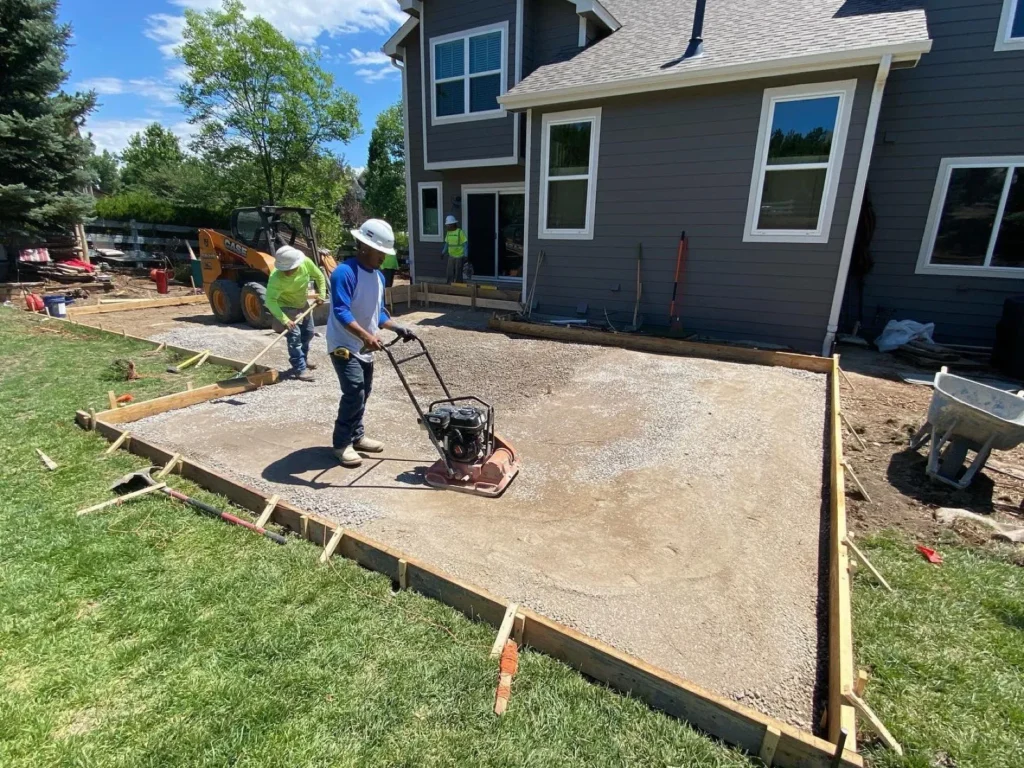
Dampening the subgrade and the forms before the pour, so dry ground does not pull water out of the slab from below.
Scheduling. Early starts, and on the hottest weeks, working with the concrete supplier on delivery temperature. Shading the slab where it is practical.
Curing that begins immediately. Curing compound or wet curing goes on as soon as the finish allows, not at the end of the day. This is the step most often shortened and the one with the clearest long-term consequence.
Our guide to pouring concrete in Denver summer heat goes further into the hot weather side, and the winter equivalent is in how we handle winter concrete projects in Colorado.
Air entrainment is separate and not optional
Evaporation control protects the surface while it is fresh. Air entrainment protects it for the next thirty winters.
Entrained air is a system of microscopic bubbles deliberately introduced into the mix, giving water somewhere to expand when it freezes inside the concrete. Any exterior slab on the Front Range needs it, because this climate delivers repeated freeze and thaw cycles with de-icing chemicals on top.
Two practical points. Air content is specified and it is measured at the truck, so it is a number on the delivery ticket rather than an assumption. And overworking or burnishing an exterior surface can drive the air out of the top layer, which is exactly the layer that needs it, which is why an exterior slab in this climate wants a broom finish rather than a hard troweled shine.
The scaling that follows from getting this wrong is covered in concrete spalling and scaling in Colorado.
The shoulder seasons are the real scheduling problem
Denver’s weather does not change gradually. A pour scheduled on a mild October morning can meet a thirty degree drop and a wind by evening, and fresh concrete that freezes before it has gained strength is permanently damaged rather than temporarily inconvenienced.
That is why the honest answer to “can you pour next week” in October or April is sometimes no, or yes with protection, rather than a flat yes. Blankets, enclosures and heat are real measures with real costs, and there is a point where waiting is the cheaper decision.
A contractor who gives you a date without looking at the forecast window around it has not thought about your slab.
Where the sun keeps affecting it after the pour
Two longer term effects are worth knowing.
Colored and stamped concrete fades faster at elevation. Ultraviolet exposure is more intense here, and integral color, color hardener and particularly surface-applied stains and dyes respond to it. Darker colors show the change more. Sealing on a maintained schedule slows it considerably, which is part of why sealing shows up as a maintenance item on every decorative slab we build. The color choices themselves are covered in choosing concrete stain colors.
Thermal cycling is larger here. A high desert climate swings hard between day and night, so a slab expands and contracts more in a day than it would at sea level. That is an argument for correct joint spacing and depth rather than for a different material, and it is covered in driveway thickness, reinforcement and joints.
What this changes about choosing a contractor
Very little of the above is visible in a finished slab on handover day. All of it is visible in year three.
So the questions worth asking are about process rather than price. What the crew does when the wind comes up. Whether they carry wind screens and an evaporation retarder. What the specified air content is and whether you can see the delivery ticket. When curing starts. What happens to the schedule if the forecast turns.
A contractor who answers those quickly is a contractor who has lost slabs to Front Range weather and changed how they work. Comparing that against a lower number is the subject of how to compare concrete bids in Denver.
Frequently asked questions
Why does concrete crack on the surface within hours of being poured?
That is plastic shrinkage cracking, and it comes from surface water evaporating faster than the slab can replace it from below. Denver’s low humidity, strong sun at elevation and wind make it common here even at moderate temperatures. The cracks are not structural, they are permanent, and they are preventable with wind screens, an evaporation retarder, fogging and curing that begins immediately.
Is it too hot to pour concrete in Denver in summer?
Rarely too hot by itself. The limiting factor is the combination of concrete temperature, air temperature, humidity and wind, and on the Front Range humidity and wind usually matter more than the thermometer. Early starts, subgrade dampening, wind screening and immediate curing make summer pours routine. A crew that is not prepared for those conditions is the actual risk.
Does concrete need air entrainment in Colorado?
On any exterior slab, yes. Entrained air gives freezing water somewhere to expand inside the concrete, and without it a slab exposed to repeated freeze and thaw with de-icing chemicals will scale. The air content is specified and measured at the truck, so it appears on the delivery ticket. Overworking or burnishing the surface can drive that air out of the top layer, which is why exterior flatwork here wants a broom finish.
Can concrete be poured in October or April on the Front Range?
Often yes, and the forecast decides rather than the calendar. The risk in the shoulder seasons is a sharp drop after the pour, because concrete that freezes before it has gained strength is permanently damaged. Blankets, enclosures and heat are real options with real costs, and there is a point where waiting is cheaper than protecting. A contractor who quotes a date without looking at the following days has not accounted for it.
Will my stamped concrete fade at this elevation?
Color changes faster here than at lower elevations because ultraviolet exposure is more intense, and darker colors and surface-applied stains show it soonest. It is gradual rather than dramatic, and sealing on a maintained schedule slows it considerably. Choosing a color with the fade in mind, rather than only the day-one appearance, is worth doing at selection time.